Mashing calculator
- Strike water temperature (°C)
- 72.4
- Computed on this page from the inputs below
- Water into the mash (litres)
- 15.0
- Computed on this page from the inputs below
- Water the whole brew day needs (litres)
- 31.0
- Computed on this page from the inputs below
- Sparge water (litres)
- 16.0
- Computed on this page from the inputs below
The factor table and the 20°C measuring temperature come from HMRC's alcoholic products technical guide; the molecular weights, the molar volume and the Henry's law constants behind the priming figures come from the NIST Chemistry WebBook and CODATA.
Email me this result
We will send you these figures and a link back to them. One email, nothing else unless you tick the box.
The figures above are a worked example (72.4) on the defaults. Change any reading and every line recalculates on your own numbers.
Download the Mashing calculator worked example (CSV)
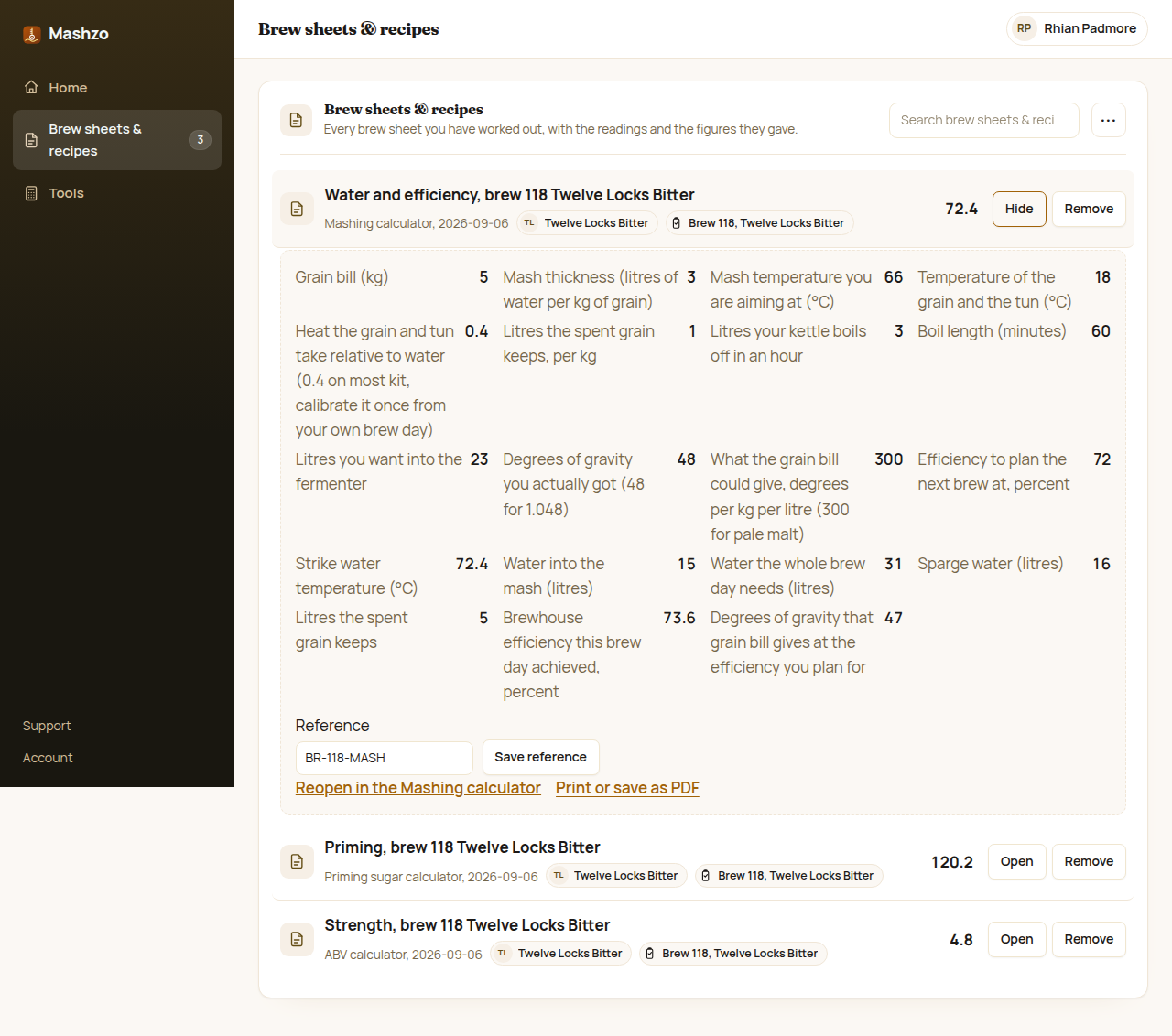
Three numbers a brew day needs before the kettle goes on, worked from the figures your own kit actually produces rather than from somebody's equipment profile. Used as a mash temperature calculator, it works backwards from the temperature you are aiming at: the strike temperature comes out of a heat balance between the water and the grain: the grain takes roughly four tenths of the heat water does per kilogram, so a thin mash needs less overshoot than a thick one. The sparge volume is the water the whole day needs (what you want in the fermenter, plus what the kettle boils off, plus what the spent grain keeps) minus what already went into the mash. And once the wort is in the fermenter, the efficiency line tells you what share of the sugar in that grain bill you actually got, which is the figure that makes every future recipe land.
What brewers ask about the Mashing calculator
What should the heat ratio be for my mash tun?
Start at 0.4, which is roughly what malt takes relative to water per kilogram, and brew once. If you doughed in and landed two degrees under, your tun is stealing that heat: nudge the ratio up until the calculator predicts what actually happened. It is the one number here worth calibrating, and after that your strike temperature stops being a guess.
Why is my brewhouse efficiency lower than the numbers people quote?
Usually the crush, then the sparge. A gap set for a shop-bought grain bill leaves whole kernels; a fast sparge leaves sugar in the grain bed. Both show up in this calculator as fewer degrees of gravity for the same grain. What matters is not matching somebody else's number but knowing yours, because a recipe written for 75% and brewed at 62% comes out a full percent weaker.
How much water does the grain keep?
About a litre per kilogram on most home setups, which is the default here. If you squeeze the bag or recirculate for a long time you will lose less; if you lift the grain straight out you will lose more. Measure what actually goes into the kettle once and put your own figure in.
What mash thickness should I use?
Two and a half to three and a half litres per kilogram covers nearly everything. Thicker mashes hold their temperature better and need a higher strike; thinner ones are easier to stir and convert a little faster. The calculator handles either: it is the ratio that sets the strike overshoot.
Does the sparge water figure include the boil-off?
Yes. The total is what you want in the fermenter, plus your kettle's boil-off over the boil length you set, plus what the spent grain keeps; the sparge figure is that total minus the mash water. If you regularly finish short, your boil-off rate is higher than the three litres an hour the box starts at.
Mashzo Pro
Keeping the readings, brew day after brew day
Pro keeps your recipes and your readings, so the efficiency and boil-off you measured last time are already in the boxes next time.
- Keep a brew day's readings so the next one starts from it
- Put two brews side by side and see what changed
- Print brew sheets with your own brew name on them, not ours
- Email a brew sheet to whoever is brewing with you
- Take payment if you sell a batch
- Send what a batch cost through to your books
£3per month, whole team
Start Mashzo Pro Free for 14 days. No card needed. PricingThe first 14 days are free and no card is asked for. Add a card during the trial and the first charge is on the day it ends; do not, and your workspace becomes read-only with nothing deleted. Mashzo Pro is £3 a month. It renews on the same day each month at the same price until you cancel, and the price and the renewal date are shown again before you pay.
Where the constants in this tool come from
HMRC, Alcoholic products technical guide, section 11.2: alcoholic strength is measured at 20°C.